
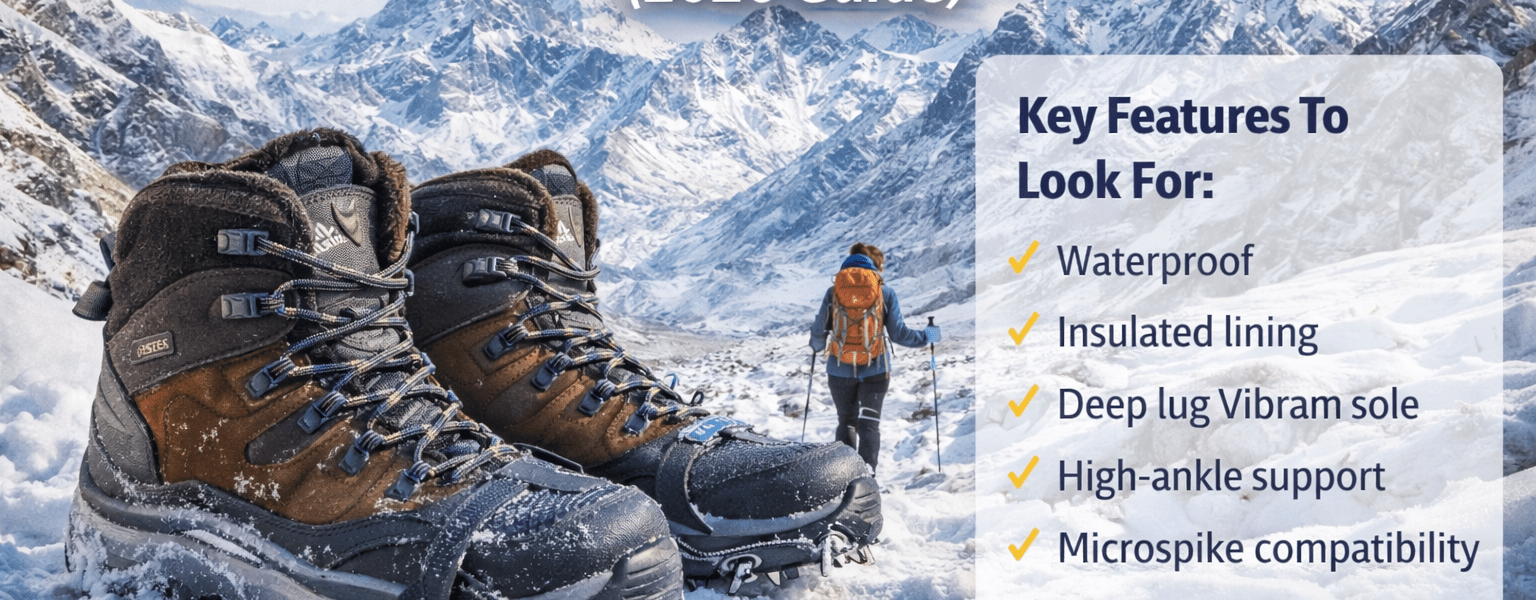
best shoes for winter mountain hiking : it is the most important decision for a safe snow trek. In winter, trails become icy, slippery, and extremely cold — especially in Himalayan regions like Kedarkantha or Kedarnath. The right winter hiking boots protect you from frostbite, provide ankle support, and offer superior grip on snow-covered paths.
This detailed guide will help you choose the perfect winter hiking shoes based on terrain, temperature, budget, and trekking season.
Quick Featured Snippet: What Makes the Best Winter Hiking Shoes?
✔ Waterproof outer material
✔ Insulated lining (Thinsulate or fleece)
✔ Deep anti-slip sole (Vibram preferred)
✔ High-ankle support
✔ Compatibility with microspikes
✔ Good breathability
Overview: What to Look for in Winter Hiking Shoes
1️⃣ Waterproof Protection
Winter trekking means snow and slush. Look for:
- Gore-Tex membrane
- Sealed seams
- Water-resistant leather or synthetic upper
Wet feet in cold weather can quickly lead to discomfort and even hypothermia.
2️⃣ Insulation & Warmth
Temperature Rating Guide:
- Mild Winter (0°C to 5°C): Light insulation
- Moderate Winter (-5°C): Medium insulation
- Extreme Cold (-10°C or below): Heavy insulated boots
For Himalayan treks like Kedarkantha, moderate insulation is ideal.
3️⃣ Sole & Grip
- Deep lug pattern
- Rubber outsole
- Compatible with crampons or microspikes
- Anti-slip traction for icy surfaces
4️⃣ Ankle Support
High-ankle boots reduce the risk of sprains on uneven snow terrain.
Seasonal Breakdown (Weather Guide)
❄ December – January
- Heavy snowfall
- Temperature: -10°C to 5°C
- Fully insulated waterproof boots required
🌨 February
- Snow begins melting
- Slushy trails
- Waterproofing essential
🌤 March
- Mixed snow & dry patches
- Medium insulation sufficient
Month-Wise Winter Hiking Guide
| Month | Shoe Requirement |
|---|---|
| Dec | Heavy insulation |
| Jan | Snow grip boots |
| Feb | Waterproof + anti-slip |
| Mar | Moderate insulation |
| Apr | Light winter boots |
Crowd & Budget Insights
💰 Price Range (India Market)
- Budget: ₹2,500–₹5,000
- Mid-Range: ₹5,000–₹10,000
- Premium: ₹10,000–₹20,000
👥 Crowd Insight
- Winter treks like Kedarkantha see high footfall in Dec–Jan
- Popular pilgrimage routes like Kedarnath require proper winter shoes during early season
Renting shoes is possible in Rishikesh, but owning a pair is safer and more hygienic.
Travel Tips for Winter Hiking
- Always wear wool socks (avoid cotton)
- Break shoes before trek
- Use gaiters for deep snow
- Keep spare dry socks
- Store boots properly after trek
- Don’t compromise on grip quality
Important Things to Know
- Snow reflects UV rays — wear sunglasses
- Boots must fit slightly roomy (for thick socks)
- Cheap shoes may crack in extreme cold
- Always test shoes on stairs before trip
- Avoid flat sole sports shoes
If planning a religious winter journey, explore Chardham Yatra and consider the Kedarnath Temple Tour Package from Rishikesh for a guided and safer experience.
FAQs – Best Shoes for Winter Mountain Hiking
1. Are normal trekking shoes suitable for snow?
No, winter trekking requires insulated waterproof boots.
2. How many socks should I wear?
One good-quality wool sock is enough; double layering may reduce circulation.
3. Do I need microspikes?
Yes, especially for icy trails.
4. Can I rent winter hiking shoes?
Yes, but check fit and hygiene carefully.
5. What sole is best for snow?
Deep lug rubber soles like Vibram offer best grip.
6. How long do winter hiking boots last?
2–4 years depending on usage and quality.
Also Read : Best Snow Shoes Under 2000 in India | 2026 Guide
Final Thoughts
Investing in the best shoes for winter mountain hiking ensures warmth, safety, and confidence on snow-covered trails. Never compromise on waterproofing, insulation, and grip — your safety depends on it.
Plan Your Winter Trek with UKHike
UKHike
🌐 Website: www.ukhike.in
📧 Email: ukhikeinfo@gmail.com
📞 Contact: +91 9045374872
Book your safe and guided Himalayan adventure today!